
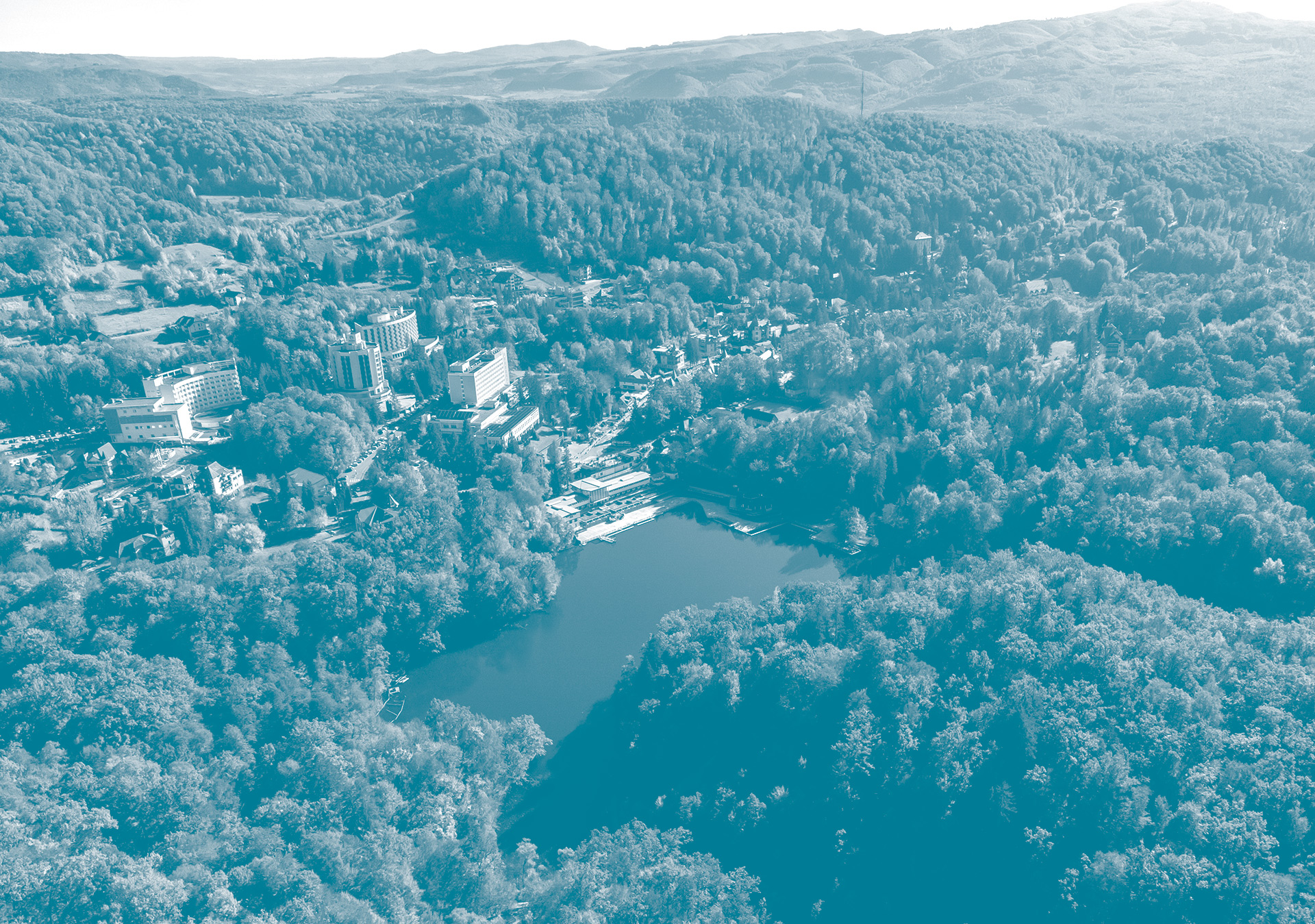
In the highlands of Transylvania, and more specifically in the Sovata region, medicinal plants were and remain a serious discipline. The region carries an unusual set of conditions: the altitude, the salt lake basin, the mineral-rich soil composition. These are not incidental. They shape the phytochemical profile of what grows here: the concentration of active compounds. Sovata's botanical richness is, in part, a product of its geography.

Generations of füves emberek (the region's herbalist scholars) understood this intuitively. They built an accumulated body of knowledge that was rigorous, local, and irreplaceable: which plant, which season, which preparation, which purpose.
Nestled between ancient forests, mountain meadows, and the world’s largest heliothermal lake, Sovata is home to one of the richest botanical regions in Transylvania. The area’s exceptional natural diversity is shaped by its salt-rich environment, unspoiled mountain ecosystems, and centuries of coexistence between people and nature.
Within a relatively small geographic area, the landscapes of Sovata range from unique saline habitats and rolling hay meadows to dense forests and subalpine environments. This remarkable variety creates ideal conditions for an extraordinary concentration of plant life, including hundreds of medicinal and aromatic species.
Transylvania is recognized as one of Europe’s most biodiverse regions, hosting an estimated 2,500-3,000 vascular plant species. Of Romania’s 700-800 medicinal plants, hundreds can be found in and around the Sovata region, many of them thriving in the pristine habitats of the nearby Gurghiu Mountains.
The area benefits from low industrial activity and minimal environmental pollution, allowing plants to develop in a clean and natural environment. Many species are still sustainably wild-harvested, while rare and highly valued medicinal plants, such as arnica, find ideal growing conditions in these highland meadows.
The region is also home to some of Transylvania’s most remarkable natural landmarks, including Lake Ursu - the largest heliothermal lake on Earth - and the vast salt deposits of the nearby Praid Salt Mine. Together, these unique geological and ecological features create a landscape unlike any other in Europe.
For generations, local communities have gathered and used medicinal plants from these mountains and meadows. This combination of exceptional biodiversity, traditional botanical knowledge, and pristine natural habitats makes the Sovata region one of Europe’s most valuable sources of medicinal and aromatic plants.
That knowledge found an unlikely but fitting heir in a veterinary family from Sovata. With the clinical precision their profession demanded, they did something rare: they took traditional formulations seriously enough to test them, refine them, and stand behind them. The result was Promedivet, a pharmaceutical manufacturing company that today ships to more than 50 countries. Not in spite of its origins, but because of them. Decades of Promedivet's research and formulation expertise inform every product in the Herba line a range that has been tested, revised, and tested again before reaching a single shelf. Behind it stands a team of 80 people who work with the kind of focus that comes from genuine belief in what they make.

A significant part of our plants in the Herba 99 line is wild-harvested from the Transylvanian highlands. This is a deliberate choice. A cultivated plant grows in controlled, uniform conditions. It is consistent, scalable, and convenient. It is also, in a meaningful sense, diminished. Wild plants develop under pressure: fluctuating temperatures, mineral-dense soils, competition for resources. That stress is not a flaw in the plant, it is the mechanism through which it produces higher concentrations of the very compounds that make it medicinally relevant.

Every tincture is produced in-house. Seventy-eight wild-harvested medicinal plant species move through the production process, each one sourced from its specific habitat, handled, and processed with the specificity this work requires.
