
Anthelmintics (dewormer)
Gastrointestinal Helminthiasis (Nematodiasis) in Poultry

Disease Overview
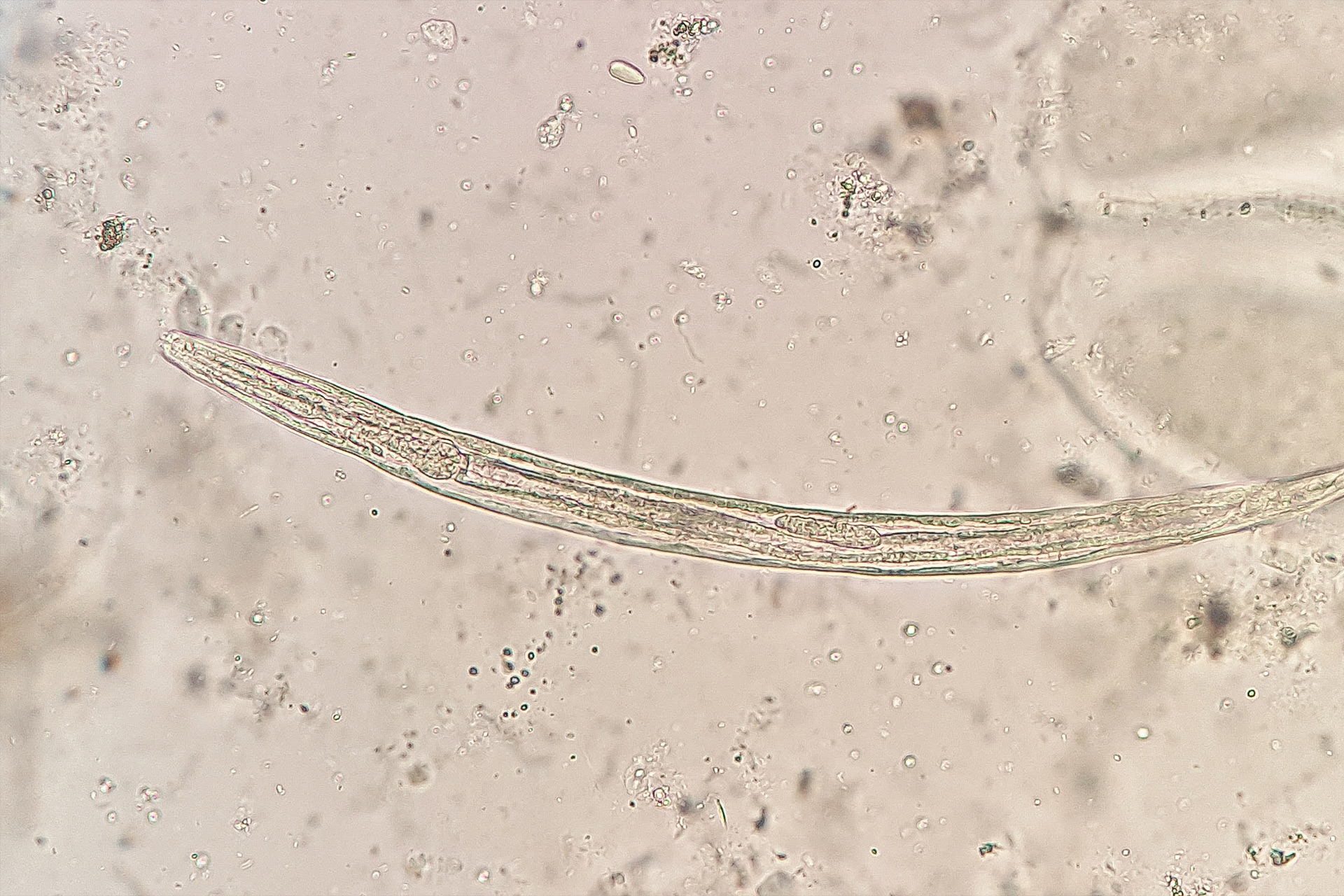
Gastrointestinal helminthiasis is one of the most common parasitic conditions in backyard and free-range poultry, in which several nematode genera frequently colonize the gut simultaneously, producing polyparasitic infections that are considerably more common than single-species infections. In a Romanian field survey of 35 backyard holdings, 68.6% carried at least one gastrointestinal helminth, with Ascaridia galli / Heterakis gallinarum (51.4%), Capillaria spp. (57.1%) and Strongyloides avium (40%) identified as the predominant species (Eimeria spp. oocysts were also frequently detected, 57.1%, though as a protozoan this parasite falls outside the anthelmintic indication and is addressed on a separate page). Polyspecific infestations - two to four concurrent nematode species - accounted for 62.9% of positive holdings, versus only 5.7% monospecific cases, a pattern consistent with a broader national survey reporting 53.1% flock-level prevalence across 145 flocks.
Backyard poultry-keeping is a long-standing, culturally embedded practice (an estimated >13 million backyard chickens are kept in Romania), typically run with minimal biosecurity and limited veterinary oversight. Deworming in this sector is frequently unregulated, over-the-counter access to synthetic anthelmintics is easy, and compliance with statutory egg/meat withdrawal periods is inconsistent - a meaningful public-health concern given that raw egg consumption directly from backyard hens is reported by up to 49% of Romanian households, the highest rate among the countries surveyed in the EU SafeConsume project. Clinically, helminth burdens are associated with reduced weight gain, impaired egg production, intestinal mucosal damage, and increased susceptibility to secondary bacterial and coccidial disease.
Mechanism of Action
Herba-Top Antihelmintic is a hydroalcoholic extract combining seven medicinal plants: thyme (Thymus serpyllum), marigold (Calendula officinalis), elecampane (Inula helenium), tansy (Tanacetum vulgare), oregano (Origanum vulgare), sweet wormwood (Artemisia annua) and wormwood (Artemisia absinthium). Quantitative phytochemical profiling of the extract identified six principal bioactive constituents - chlorogenic acid (the predominant compound), caffeic acid, quercitrin, luteolin, apigenin and quercetin - a polyphenol/flavonoid and hydroxycinnamic-acid profile consistent with the tannin- and phenolic-bearing species from which the extract is derived.
The manufacturer's own pharmacotherapeutic classification attributes to the formulation anthelmintic, antiseptic, anti-inflammatory, antispasmodic, hepatoprotective, choleretic and astringent properties. In general parasitological terms, plant polyphenols of this class are understood to interfere with nematode egg and larval development through protein-precipitating (tannin-like) binding to cuticle and eggshell glycoproteins, disruption of redox balance within the parasite, and interference with nutrient uptake and neuromuscular coordination in adult worms; the choleretic and antispasmodic actions attributed to the plant matrix may additionally support physical clearance of adult and larval stages from the gut lumen.
Research Studies
Study 1 - Field Efficacy Trial (In Vivo)
Title: Assessment of the Anthelmintic Efficacy of a Plant Extract in Backyard-Raised Chickens in Romania (internal report title: "Evaluarea eficacității antihelmintice a unui extract de plante la găini crescute în sistem extensiv")
Report reference: CTR. No. 17084/17.07.2023 - Scientific Report, Stage I
Principal investigator: Assist. Prof. Dr. Mircea Coroian, DVM, PhD, ECPVS Resident
Institution: University of Agricultural Sciences and Veterinary Medicine (USAMV) Cluj-Napoca - Faculty of Veterinary Medicine, Discipline of Parasitology and Parasitic Diseases, in collaboration with the Department of Poultry Management and Pathology
Sponsor / product owner: Promedivet (Sovata, Romania)
Study period: September 2023 – June/August 2024 (report dated Cluj-Napoca, 18 July 2024)
Location: Cluj, Mureș and Harghita counties, Romania
Dissemination: ECPVS AGM & Symposium 2024 (24–25 October 2024, Ghent, Belgium); XXIIIrd World Veterinary Poultry Association (WVPA) Congress 2025 (6–10 October 2025, Kuching, Sarawak, Malaysia). A manuscript is reported to be in preparation for peer-reviewed submission; it has not yet appeared in a peer-reviewed journal.

Study 2 - In Vitro Ovicidal / Egg-Development Inhibition Assay
Title: Report on the Evaluation of the In Vitro Anthelmintic Effect on Ascaridia galli Eggs of a Plant Extract (Herba-Top Antihelmintic)
Institution: USAMV Cluj-Napoca - Faculty of Veterinary Medicine, Discipline of Parasitology, Parasitology and Parasitic Diseases Laboratory
Sponsor / product owner: Promedivet (Sovata, Romania)
Report date: Cluj-Napoca, 31 January 2025
Method: In-ovo larval development test (embryonation-inhibition assay, IEO), following methodology adapted from Marchiondo et al. (2019), Feyera et al. (2020) and Rahimian et al. (2016)
Institutional logos: USAMV Cluj-Napoca · Faculty of Veterinary Medicine Cluj-Napoca · Promedivet (logo artwork to be pulled from the original PDF report)

Study 3 - Experimental Infection Model (in progress)
Title: Assessment of the Anthelmintic Efficacy of a Plant Extract in Experimental Ascaridia galli Infection in Broiler Chickens
Status: Identified as the third stage of the research programme in the dissemination materials. No protocol, dosing, sample size, or results were supplied. To be added once the corresponding report becomes available.
Study Summary Table
References
- Yazwinski, T.A., Chapman, H.D., Davis, R.B., Letonja, T., Pote, L., Maes, L., Vercruysse, J., Jacobs, D.E. (2003). World Association for the Advancement of Veterinary Parasitology (WAAVP) guidelines for evaluating the effectiveness of anthelmintics in chickens and turkeys. Veterinary Parasitology, 116(2), 159–173. DOI: 10.1016/S0304-4017(03)00264-4. PubMed: PMID 14519320.
- Coles, G.C., Bauer, C., Borgsteede, F.H.M., Geerts, S., Klei, T.R., Taylor, M.A., Waller, P.J. (1992). WAAVP methods for the detection of anthelmintic resistance in nematodes of veterinary importance. Veterinary Parasitology, 44(1–2), 35–44. DOI: 10.1016/0304-4017(92)90141-U. PubMed: PMID 1441190.
- Marchiondo, A.A., Cruthers, L.R., Reinemeyer, C.R. (2019). Parasiticide Screening: In Vitro and In Vivo Tests with Relevant Parasite Rearing and Host Infection/Infestation Methods, Vol. 2, pp. 142–159. Academic Press. (Book chapter — no DOI/PubMed record available.)
- Feyera, T., Ruhnke, I., Sharpe, B., Elliott, T., Campbell, D.L.M., Walkden-Brown, S.W. (2020). Viability and development of Ascaridia galli eggs recovered in artificial media followed by storage under different conditions. Journal of Helminthology, 94, e199. DOI: 10.1017/S0022149X2000084X.
- Rahimian, S., Gauly, M., Daş, G. (2016). Embryonation ability of Ascaridia galli eggs isolated from worm uteri or host faeces. Veterinary Parasitology, 215, 29–34. DOI: 10.1016/j.vetpar.2015.10.026.
Raw Material and Supplier Transparency
- Manufacturer: Promedivet, Sovata, Romania.
- Botanical sourcing: the seven constituent plants (Calendula officinalis, Inula helenium, Origanum vulgare, Artemisia annua, Thymus serpyllum, Tanacetum vulgare, Artemisia absinthium) are described as "cultivated or found in the wild flora of Romania."
- Extraction method: hydroalcoholic extraction; exact solvent ratio, extraction protocol and standardization parameters are not detailed in the supplied documents.
- Formulation format: ready-to-use liquid, in 100 ml, 500 ml and 1 L plastic bottles; two-year shelf life in the original, sealed packaging, stored at 15–25 °C.

Additional Relevant Parameter: Withdrawal Period & Food-Safety Context
Per the manufacturer's product literature, Herba-Top Antihelmintic carries no withdrawal period and may be used up to the point of slaughter.
This is presented in contrast to the conventional synthetic anthelmintics referenced in the dissemination materials: flubendazole 10 mg (eggs: 7 days; meat/offal: 28 days); flubendazole 50 mg (eggs: 7 days; meat/offal: 14 days); levamisole hydrochloride 100 mg (not authorized in laying hens producing eggs for human consumption); fenbendazole 200 mg (eggs: 0 days; meat/offal: 6 days).
The source materials frame this as a practical advantage in backyard/organic contexts, where withdrawal-period compliance is reported to be inconsistent and raw-egg consumption directly from backyard flocks is common (up to 49% of households in Romania, per SafeConsume project data cited in the dissemination deck).
